 listicle
Fully Insured Removalists Perth: 7 Quote Checks Before You Book
Last Updated: October 30, 2026
Quick Summary
Fully insured removalists in Perth should provide a current certificate of currency showing transit cover for your goods, not only public liability. Check the sum insured, per-item limits, exclusions and excess before booking, and compare quotes on the same inventory and total cost including GST.
- Fully insured" can mean public liability only, which does not pay for damage to your own goods.
- Ask for a current certificate of currency whose dates cover your moving day.
- Confirm the sum insured, excess, and any per-item or per-category sub-limits in writing.
- Photograph high-value items and sign a condition report at pickup to support any claim.
- Compare quotes on total cost including GST, minimum hours, travel and likely extras.
Table of Contents
- Why "Fully Insured" Needs Checking Before You Book
- What Removalist Insurance Actually Covers
- How to Verify Insurance and Licensing
- Perth Removalist Options Compared
- How to Compare Removalist Quotes Like for Like
- Questions to Ask Removalists Before Booking
- Your Removalist Quote Checklist and What to Do Next
- Frequently Asked Questions
Why "Fully Insured" Needs Checking Before You Book
When a removalist says they are fully insured, that phrase carries weight, but it does not tell you much on its own. For practical steps to avoid damage that insurance may not cover, see how to avoid removalist damage.
Checking fully insured removalists Perth quotes before you book is a sensible step, and it can save you from paying for a scratched sofa with no recourse.
What Removalist Insurance Actually Covers
"Fully insured" is a marketing phrase, not a policy term. What a provider actually holds is usually a combination of policies, each with its own limits, exclusions and excess.
The three covers that matter
Transit (goods-in-transit) cover protects your belongings while they are in the removalist's care, during loading, transit, unloading and, depending on the policy, while stored overnight.
Public liability cover protects the removalist against third-party claims, a clipped neighbour's fence, a visitor injured by a trolley, or damage to common property.
Marine transit or carrier's liability is the underlying legal liability a carrier holds for goods in its custody.
A provider holding only public liability is not lying when they say "fully insured", they are simply using the phrase in a way that does not protect your furniture. Always ask which policy responds to damage to your goods.
Excesses, sub-limits and the per-item trap
Every transit policy carries an excess, the amount deducted from any claim payout. A common pattern is a fixed excess per claim, sometimes per item. If your excess is high relative to the item damaged, a small claim may not be worth lodging.
Policies also apply sub-limits: a maximum payout per item, per category (for example, electronics, artwork, or jewellery), or per claim.
What is almost always excluded
Standard exclusions you should expect to see:
- Pre-existing damage, a scratch or chip that was there before the move.
- Items you packed yourself, many policies exclude or limit cover for boxes packed by the customer, because the removalist cannot verify how they were packed. If you self-pack, ask whether "owner-packed" goods are covered at all.
- Prohibited or undeclared items, cash, jewellery, passports, documents, plants, perishables, hazardous goods and, often, firearms. These usually need to be declared or removed before the move.
How a claim actually works
The mechanism matters more than the wording. A typical transit claim follows this path:
- Notify the provider promptly, often within a set window (commonly 7 to 30 days, but confirm the exact period in the policy). Late notification can void a claim.
- Provide evidence, photos of the damage, photos of the item before the move, the inventory or condition report signed at pickup, and the delivery receipt.
- The insurer assesses, an assessor may inspect, or the claim may be settled on documents for smaller amounts.
- Excess is deducted and the payout is capped by the sub-limit.
The single most useful document in any claim is a condition report or inventory signed at pickup. Photograph every high-value item before the crew arrives, note existing marks in writing, and keep the signed inventory with your booking confirmation. Without it, a pre-existing-damage exclusion is almost impossible to argue against.
Does your home contents policy help?
Many household contents policies include limited cover for goods in transit during a move, sometimes only if professional removalists are used. Check your own policy's transit limit and excess before relying on the removalist's cover alone, the two can interact, and claiming on one may affect the other. Your insurer can confirm the interaction in writing.
The questions that separate real cover from a slogan
Ask, and ask for the answer in writing:
- Which policy responds to damage to my goods, transit, carrier's liability, or neither?
- Is cover value-based or capped by weight?
- What is the excess, and is it per claim or per item?
How to Verify Insurance and Licensing
Do not rely on a verbal promise. Ask for a current certificate of currency, which is the document an insurer issues to confirm a policy is active.
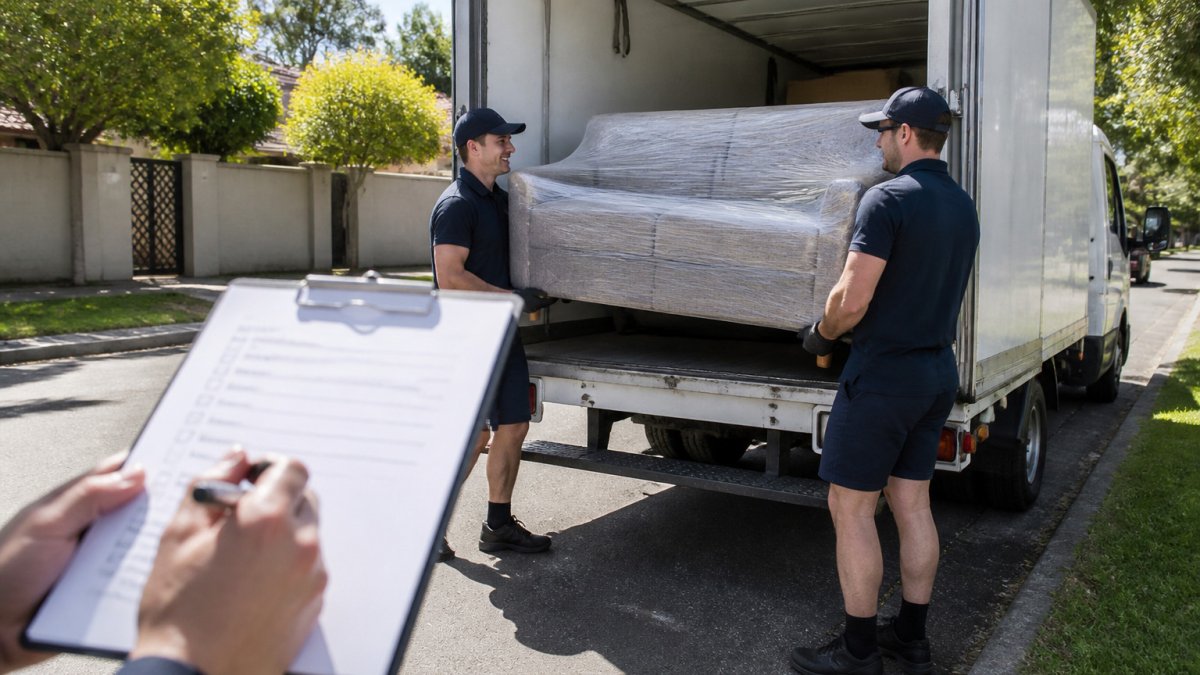
Check that the policy dates cover your moving day.
Licensing matters too.
It is sensible to save the certificate and attach it to your booking confirmation. If something goes wrong, you will have proof of what was promised.
Perth Removalist Options Compared
Perth has many removalists, and the marketing language often looks similar. Comparing them on a few practical points gives you a clearer picture than any slogan.
Furniture Removals (TC Removals) is a family-run furniture removal service in Perth offering fully insured moving solutions. Visit our Services page to see what is included. Our short term storage Perth cost guide shows what storage typically adds to a move.
How to Compare Removalist Quotes Like for Like
Two quotes for the same move can differ by hundreds of dollars and still both be "correct", because they are pricing different things. The headline rate is the least useful number on the page. What determines your total cost is the inclusions, the minimums, and the fine print. This section sets out a framework for comparing quotes on total cost rather than headline rate.
Step 1: Build one move brief and send it to everyone
Every provider must quote the same job. Write a single brief covering:
- Inventory, room by room, with large or specialty items listed separately (piano, pool table, safe, gym equipment, antiques).
- Access at both ends, floor level, lift availability and whether a lift booking is required, stair count and turn width, distance from truck to door, and any narrow doorways or tight corners.
- Parking, whether a permit is needed, and how far the truck can park from the entrance.
Send the identical brief to each provider. A quote based on a vague phone description is not comparable to one based on a written brief.
Step 2: Compare the line items, not the total
Put each quote side by side against these categories. The differences are where the real cost hides.
| Line item | What to check | Why it changes the total |
|---|---|---|
| Rate basis | Hourly or fixed price | Hourly quotes can balloon if the job runs long; fixed quotes cap your exposure but may carry a premium |
| Minimum hours | Minimum booking (commonly 2-4 hours) | A 90-minute job billed at a 3-hour minimum costs double the headline rate |
| Travel time | Whether travel to and from the depot is charged | Travel can add an hour or more to a short local move |
| Crew size | Number of movers included | A two-person crew at a low hourly rate can be slower than a three-person crew at a higher rate |
| Truck size and trips | Whether one truck load is assumed | A job needing two trips doubles labour hours |
| Packing and materials | Boxes, tape, wrap, wardrobe cartons included or extra | Materials can add a meaningful amount to a self-packed move |
| Stairs and lift | Stair fees, lift booking fees, long-carry fees | Often quoted as extras after the fact |
| Parking permits | Who arranges and pays | A permit can be a real cost and a delay if not booked |
| GST | Included or added | A quote that excludes GST is effectively higher than one that includes it |
| Insurance | Type, sum insured, excess | "Fully insured" may mean public liability only |
| Cancellation and rescheduling | Notice period and fees | A cheap quote with a harsh cancellation fee is a risk if your settlement date moves |
| Payment terms | Deposit, card surcharge, payment timing | Surcharges and deposits affect cash flow and total cost |
Convert every quote to a single comparable number: estimated total cost including GST, minimums, travel and likely extras. An hourly quote at a low rate with a 3-hour minimum and charged travel can be more expensive than a fixed quote that looks higher on the page.
Step 3: Work a simple example
Suppose your move is estimated at 2.5 hours of work with a two-person crew.
- Provider A quotes an hourly rate with a 3-hour minimum, charges travel, and excludes GST. Your bill is based on 3 hours plus travel, plus GST, likely well above the headline.
- Provider B quotes a fixed price that includes GST, packing materials and stair access, with a stated cancellation window. The number looks higher, but it is the number you will actually pay.
The lesson is not that fixed is always better, it is that you must normalise both quotes to the same basis before comparing. Ask each provider to confirm, in writing, the total you would pay for the brief you sent, including GST and all likely extras.
Step 4: Read the terms that affect risk
Price is only half the comparison. Check:
- Cancellation and rescheduling, notice period, fee scale, and what happens if your settlement is delayed.
- Damage liability, what the provider accepts responsibility for, and whether that is backed by transit cover or only public liability.
- Subcontracting, whether the crew is employed directly or subcontracted, and who is insured.
Step 5: Ask for the total in writing
Before you book, ask each shortlisted provider to confirm the total cost for your brief, including GST, minimum hours, travel, stair or lift fees, materials and any likely extras. A provider who will put that in writing is giving you a comparable number. A provider who will only quote a headline rate is asking you to take on the risk of the difference.
A like-for-like comparison is not about finding the cheapest quote, it is about finding the quote whose total cost and terms you can actually rely on. Normalise to total cost including GST, confirm inclusions in writing, and compare the cancellation and damage terms alongside the price.
Questions to Ask Removalists Before Booking
Asking the right questions upfront prevents most disputes. Here are the ones we would ask:
- Can I see a current certificate of currency for transit and public liability insurance?
- What is the sum insured, and is it per item or per claim?
- Which items are excluded from cover, and what are the limits for antiques or electronics?
A provider who answers these clearly is giving you useful evidence about how they operate.
Your Removalist Quote Checklist and What to Do Next
Use this checklist before you commit:
- Certificate of currency received and checked, with dates covering moving day
- Insurance type confirmed: transit cover for your goods, plus public liability
- Sum insured and any per-item limits noted
Once your shortlist is checked, contact us to request a quote and to confirm our insurance details in writing. Call us today to talk through your move.
Frequently Asked Questions
What does fully insured mean for removalists?
Fully insured usually means the removalist holds some form of cover for goods in transit, often called transit insurance, and public liability cover for damage to property at the pickup or drop-off address. The term is not a legal standard, so it does not tell you the amount of cover, the excess you would pay, or what is excluded. Ask for the certificate of currency and read the sum insured, excess and exclusions before you book, and confirm whether the cover applies to your specific items.
Does removalist insurance cover damage to my belongings?
It can, but usually only up to the sum insured on the policy and subject to exclusions such as pre-existing damage, poor packing by the customer, or items the removalist was not told about. Many policies also pay on a depreciated or per-kilogram basis rather than replacement value. Photograph and list high-value items before the move, and ask the removalist how a damage claim is lodged and how long it takes to resolve.
How can I verify a removalist's insurance?
Ask the company for a current certificate of currency from its insurer and check that the policy names the business, is in force on your moving date, and lists the cover types you need. Confirm the insurer is a licensed general insurer, and check the removalist's business registration and ABN with the Australian Business Register. Keep copies of everything, because a verbal assurance will not help you make a claim.
What should I do if an item is damaged during a move?
Note the damage on the delivery paperwork before you sign and take photos straight away. Notify the removalist in writing within the time stated in the booking terms, usually a short window after delivery, and provide the inventory, photos and any valuation or receipt. Then follow the claim process set out in their insurance details, and keep a record of every message in case you need to escalate.
Furniture Removals is a family-run removal service in Perth. We provide fully insured moving solutions so your belongings are protected from start to finish.