 how-to
How to Move Fragile Furniture Safely Without Damage
Quick Summary
To move fragile furniture safely, start by measuring doorways, stairs and the largest piece, then clear the route of rugs, cords and wall hangings. Wrap each piece in moving blankets for padding and add bubble wrap to delicate corners and edges, securing it with straps rather than tape against the surface.
- Measure doorways, stair widths and the largest piece before moving day.
- Most damage happens in doorways, on stairs and in tight hallways.
- Use moving blankets for large or upholstered pieces and bubble wrap for glass and delicate details.
- Never apply standard packing tape directly to polished timber, veneer or painted surfaces.
- Remove the glass top from a table and stand the glass upright in the truck.
Table of Contents
- Planning the Move and Clearing the Route
- Choosing the Right Protective Packing Materials
- How to Wrap Furniture for Moving by Material
- How to Protect Timber Floors When Moving Furniture
- How to Move a Glass Table Safely
- Furniture Moving Equipment and Safe Lifting Technique
- Booking Your Fragile Furniture Move With Furniture Removals
- Frequently Asked Questions
Planning the Move and Clearing the Route
Last Updated: November 10, 2026
Moving fragile furniture safely starts long before the removalist arrives. Most damage happens in doorways, on stairs and in tight hallways, not on the open road.
A walk-through of the home before a fragile move helps identify tight spots.
Measure everything before the move:
- Doorway widths and heights
- Stair width and any tight turns
- Lift or elevator dimensions
- Width of the largest piece, including legs and handles
Ask whether a piece can leave by a different route, such as a wider back door or a balcony.
Clear the path before the team arrives:
- Remove rugs, mats and loose cords that can trip a mover
- Shut pets in another room
- Take down wall hangings near the route
- Park the truck as close to the entrance as possible
Ask the removalist about parking permits if the truck needs to stop on a busy street.
Choosing the Right Protective Packing Materials
Good packing materials are the first line of defence for fragile furniture, but the wrong material can do as much harm as none at all.
Match the material to the job:
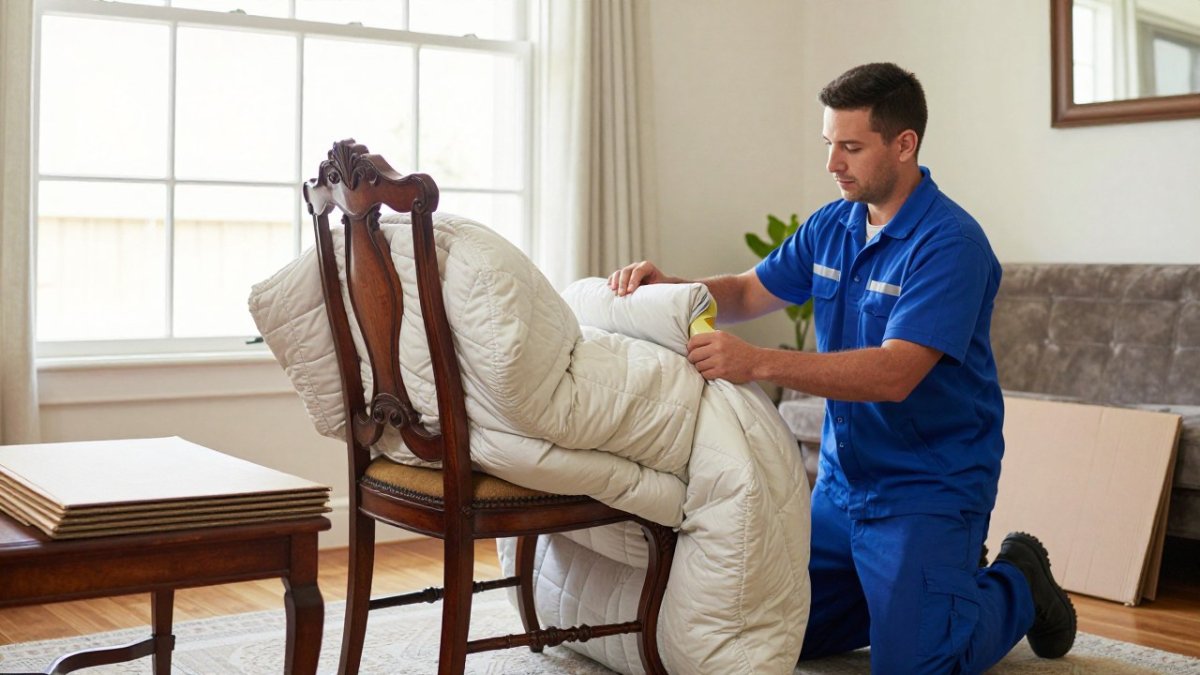
- Moving blankets: the default for large, flat or upholstered pieces such as wardrobes, dining tables, sofas and armchairs. They cushion impact, spread pressure and can be reused.
- Bubble wrap: best for glass, mirrors, carved details, spindles, legs and any surface that can crack or chip. Use the small-bubble type on polished timber and veneer; large bubbles can leave pressure marks on soft finishes.
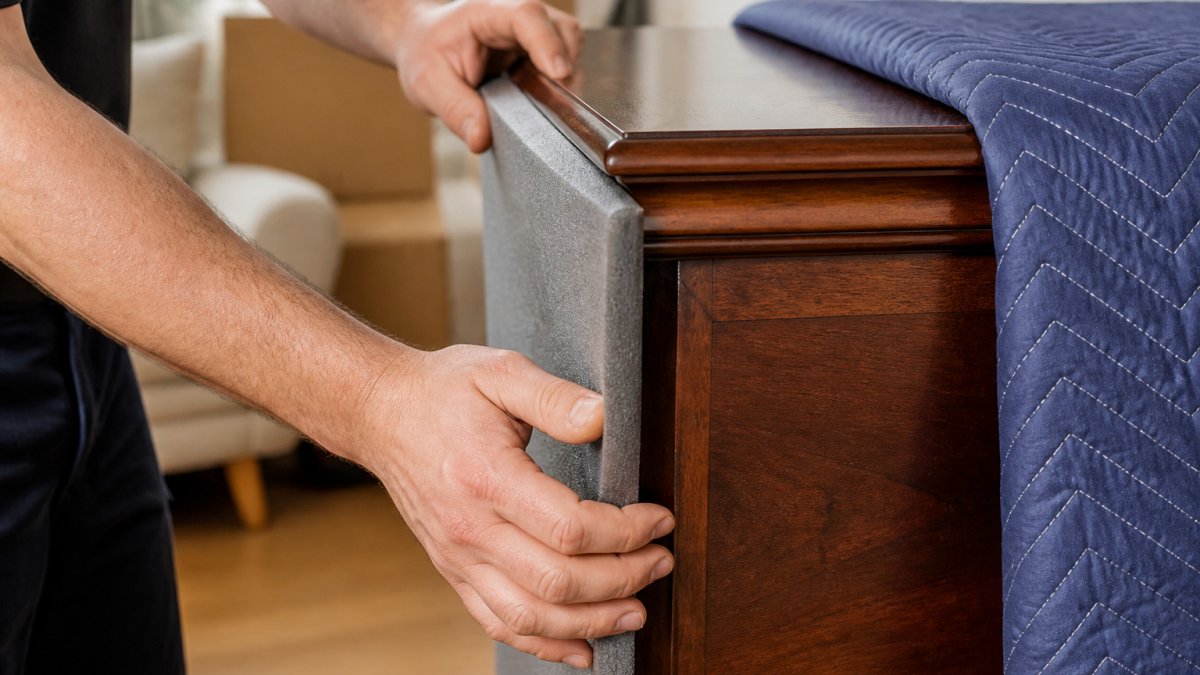
- Foam sheeting or foam corner protectors: for sharp edges on timber and metal frames, and for stacking pieces so they do not rub. Foam is firmer than bubble wrap and holds its shape under load.
- Stretch wrap (plastic film): an outer layer that holds blankets and padding in place, keeps out dust and light rain, and stops drawers and doors from opening in transit. It is not a cushion on its own.
- Packing tape and painter's tape: to secure wrap and blankets. Never apply standard packing tape directly to polished timber, veneer, lacquer or painted surfaces, the adhesive can lift the finish.
- Cardboard sheets: to separate stacked pieces and to protect floors and corners along the route.
Application rules that prevent the most common damage:
- Clean and dry the piece first. Grit under a blanket acts like sandpaper as the load shifts.
- Pad the most delicate area first, corners, edges, handles and carved details, then wrap the whole piece.
- Wrap snugly but not tight. Over-tight stretch wrap can crush upholstery filling and pull veneer away from its substrate.
- Leave a small breathing gap on solid timber and antiques. Sealing a piece completely in plastic can trap moisture and encourage swelling, mould or finish bloom, especially in humid weather or on a long trip.
- Secure blankets with rope, straps or painter's tape rather than standard packing tape against the surface.
- Label each wrapped piece with its room and which side faces up, so the loading team does not have to guess.
Watch out: Stretch wrap applied directly over a French-polished or oiled surface can leave a cloudy bloom that only a restorer can remove. Put a layer of acid-free tissue or a soft blanket between the finish and the plastic.
Buy packing materials to suit the pieces you actually have, rather than a generic starter pack.
How to Wrap Furniture for Moving by Material
Different materials need different care. Wood, upholstery, metal and glass each react differently to pressure, moisture and friction.
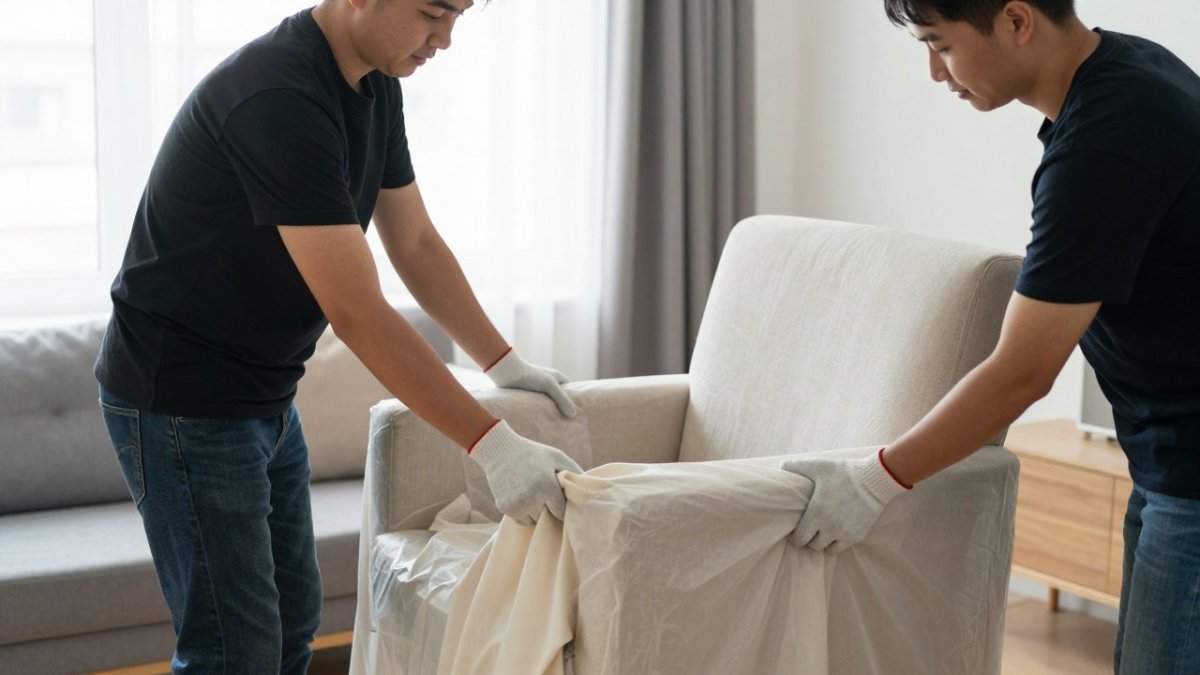
!Two movers in work gloves wrapping an upholstered armchair in a moving blanket inside a bright living room
Start with a clean, dry piece. Dust and grit can scratch the surface as the blanket rubs against it.
Wrapping approach by material:
- Solid timber: Use a moving blanket first, then a layer of plastic film to block moisture.
- Upholstered furniture: Wrap in plastic first to keep dirt out, then add a blanket over the top.
- Metal frames: Pad corners and joints with bubble wrap to stop dents.
- Glass tops: Wrap each pane separately and never stack them without padding between.
Wrap the piece snugly but not so tight that the blanket pulls at the finish. Our guide on preventing furniture scratches during a move covers this in more depth.
How to Protect Timber Floors When Moving Furniture
Timber floors scratch easily, and a single dragged table leg can leave a mark that lasts for years. Protecting the floor is just as important as protecting the furniture.
Protective board or heavy cardboard laid along the route before the first item moves can help protect timber floors. Lifting items rather than sliding them is generally the safer approach.
Floor protection checklist:
- Lay board or cardboard along the full route
- Use furniture sliders only on protected surfaces
- Wipe the soles of boots before entering the house
- Place a blanket under heavy items during loading
Watch out: Furniture sliders on bare timber can still leave scratches if grit gets trapped underneath. Sweep the floor first.
How to Move a Glass Table Safely
Glass tables are among the most common items damaged in a move. If you are moving valuable pieces, see how to move expensive antiques with extra care.
Removing the glass top from the base before moving can make a glass table easier to protect. Wrapping each piece separately and carrying the glass upright rather than flat are commonly recommended approaches.
Steps for moving a glass table:
- Remove the glass top and place it on a soft surface
- Wrap the glass in a blanket, then bubble wrap, and tape the wrap securely
- Dismantle the base if the legs unscrew
- Wrap the base in blankets and place it in the truck first
- Stand the glass upright in the truck with padding on both sides
Furniture Moving Equipment and Safe Lifting Technique
The right equipment and lifting method protect both the furniture and the people carrying it. For broader steps, read our guide to avoiding removalist damage.
Choose the aid to suit the load and the surface:
- Furniture sliders (hard or felt pads): good for heavy items on flat, protected hard floors and short carpet runs. They are not a substitute for lifting on stairs, thresholds or bare timber, where trapped grit can still scratch.
- Dolly trolley or hand truck: the default for heavy, boxy items on flat ground and for the walk from the door to the truck. Strap the load to the trolley, an unstrapped wardrobe on a dolly is a tipping hazard.
- Lifting straps and forearm straps: spread the load across the shoulders and forearms, which helps with awkward shapes such as sofas and long tables. They free the hands for grip and balance.
- Moving blankets as a sling: a quick option for bulky but light pieces; less suitable for sharp or heavy items that can cut through the fabric.
- Padded gloves and closed, non-slip footwear: gloves protect hands from splinters and edges; sturdy shoes protect feet and give grip on stairs and ramps.
A chronological workflow from room to truck:
- Prepare the piece. Remove drawers, shelves, glass tops and loose parts, and bag the hardware with its fixings taped to the piece or labelled in a zip bag. A wardrobe with its contents and drawers removed is far easier and safer to move.
- Wrap and label. Pad corners, wrap the piece, and mark the room and which side faces up.
- Clear and check the route. Walk the path with the largest piece in mind, check door widths, stair turns and lift dimensions, and remove rugs, cords and wall hangings. Shut pets and children away from the route.
- Brief the team. Agree who calls the lift, which direction the piece faces, and where it will be set down. A simple "ready, lift, walk, set down" call prevents most crushed fingers and dropped corners.
- Lift correctly. Bend at the knees, keep the load close to the body, avoid twisting, and take small steps. On stairs, the person at the lower end carries more of the weight and the team moves one step at a time.
- Load and restrain. Place heavy, fragile pieces against the truck wall or bulkhead, distribute weight evenly front to back and side to side, and secure everything with straps or load bars so nothing can shift under braking. Stand glass and mirrors upright, never flat, and pad between stacked pieces.
- Unload and reassemble. Reverse the loading order so the first items out are the ones you need first, then reassemble and check fixings before the truck leaves.
Risk checks before any lift:
- Is the piece heavier than two people can safely carry? If in doubt, add a third person or use equipment.
- Is the route clear of stairs, tight turns, low doorways, pets and children?
- Are gloves and footwear suitable, and is the floor dry?
- Has the team agreed on the lift call and the set-down point?
Watch out: If a piece starts to tip or a grip slips, set it down and reset rather than trying to correct mid-carry.
Reducing the weight before lifting can make a fragile piece safer to handle, for example by removing drawers, shelves and loose parts first.
The table below summarises the main moving aids and when to use each one.
| Aid | Best for | Key limit |
|---|---|---|
| Furniture sliders | Heavy items on flat, protected hard floors | Not for stairs or bare timber |
| Dolly trolley or hand truck | Heavy, boxy items on flat ground | Strap the load to prevent tipping |
| Lifting and forearm straps | Bulky shapes such as sofas and long tables | Spread the load across shoulders and arms |
| Moving blanket sling | Bulky but light pieces | Unsuitable for sharp or heavy items |
| Padded gloves and non-slip footwear | Protecting hands and feet on stairs and ramps | Choose closed, sturdy shoes |
Booking Your Fragile Furniture Move With Furniture Removals
Preparation can make a move smoother. When booking a fragile furniture move, it helps to tell the removalist about any antiques, glass or pieces that need extra care.
You can see the full range of moving services for fragile furniture to find the option that suits your home. When you are ready to book, contact our team for a quote
Fragile furniture takes care, and good planning helps protect pieces during a move. Call us today to get started.
Frequently Asked Questions
How do you wrap fragile furniture for moving?
Start by cleaning the piece and removing loose cushions, glass and hardware. Cover timber and painted surfaces with a layer of soft cloth or foam, then wrap the whole piece in a moving blanket secured with packing tape. Avoid tape directly on polished or upholstered surfaces, as it can leave residue or pull fabric. Wrap corners and legs separately with bubble wrap or plastic film, which protects vulnerable areas from knocks during loading and transport.
What is the safest way to move a glass table?
Remove the glass top first and wrap it separately in bubble wrap, then cardboard, and carry it on its edge rather than flat. Disassemble the base and wrap each component. Keep the glass upright in the truck, secured with straps and padding so it cannot shift. Moving a glass top with two people, one at each end, reduces the risk of dropping it during the carry.
Should you dismantle fragile furniture before moving it?
Where possible, yes. Removing legs, shelves, drawers and doors reduces the weight and size of each piece, which makes it easier to carry through doorways and stairs. Keep all screws and fittings together in a labelled bag taped to the relevant piece. Dismantling also protects the components themselves, since loose parts are the most common source of damage during a move.
Can you move fragile furniture without professional movers?
You can, provided the piece is light enough to carry safely, the route is clear and you have enough helpers. Heavy, antique or oversized items are harder to protect and riskier to lift without equipment such as furniture sliders and straps. Insured professional removalists carry the right equipment and cover for damage, which matters for high-value or irreplaceable furniture.